Good Friday (Holy Friday)
| ||||||||||
Woodlands Junior School is in the south-east corner of Englan
| ||||||||||
  What is Good Friday?
On Good Friday, Christians remember the day when Jesus was crucified on a cross.
When is Good Friday?
Good Friday is the Friday before Easter Sunday (Easter Day).
The date of Good Friday changes every year.
See our main Easter page to find out why. What was the date for first Good Friday?
The date of the first Good Friday will never be known
|

Thursday, 5 April 2012
Good Friday...


The History of the Greetings Card.

(Taken from Wikipedia)
The custom of sending greeting cards can be traced back to the ancientChinese, who exchanged messages of good will to celebrate the New Year, and to the early Egyptians, who conveyed their greetings on papyrusscrolls. By the early 15th century, handmade paper greeting cards were being exchanged in Europe. The Germans are known to have printed New Year's greetings from woodcuts as early as 1400, and handmade paper Valentines were being exchanged in various parts of Europe in the early to mid-15th century, with the oldest Valentine in existence being in the British Museum.[2]
By the 1850s, the greeting card had been transformed from a relatively expensive, handmade and hand-delivered gift to a popular and affordable means of personal communication, due largely to advances in printing, mechanization, and a reduction in postal rates with the introduction of thepostage stamp.[3] This was followed by new trends like Christmas cards, the first of which appeared in published form in London in 1843 when Sir Henry Cole hired artist John Calcott Horsley to design a holiday card that he could send to his friends and acquaintances. In the 1860s, companies like Marcus Ward & Co, Goodall and Charles Bennett began the mass production of greeting cards. They employed well known artists such as Kate Greenaway and Walter Crane as illustrators and card designers.
Technical developments like color lithography in 1930 propelled the manufactured greeting card industry forward. Humorous greeting cards, known as studio cards, became popular in the late 1940s and 1950s.
In the 1970s Recycled Paper Greetings, a small company needing to establish a competing identity against the large companies likeHallmark Cards, began publishing humorous "whimsical" card designs with the artist's name credited on the back. This was away from what was known as the standard look (sometimes called the Hallmark look.)[citation needed] By the 1980s there was a thriving market for what were now called "alternative" greeting cards, and the name stuck even though these "alternative" cards changed the look of the entire industry.
The largest recorded number of greeting cards sent to a single person went to Craig Shergold, an early beneficiary/victim of an Internet chain mail.

(Taken from Wikipedia)
A greeting card is an illustrated, folded card featuring an expression of friendship or other sentiment. Although greeting cards are usually given on special occasions such asbirthdays, Christmas or other holidays, they are also sent to convey thanks or express other feeling. Greeting cards, usually packaged with an envelope, come in a variety of styles. There are both mass-produced as well as handmade versions that are distributed by hundreds of companies large and small. While typically inexpensive, more elaborate cards with die-cuts or glued-on decorations may be more expensive.
Hallmark Cards and American Greetings are the largest producers of greeting cards in the world. In the United Kingdom, it is estimated that one billion pounds are spent on greeting cards every year, with the average person sending 55 cards per year.[1]
In western countries and increasingly in other societies, many people traditionally mail seasonally themed cards to their friends and relatives in December. Many service businesses also send cards to their customers in this season, usually with a universally acceptable non-religious message such as "happy holidays" or "seasons's greetings".
The Greeting Card Association is an international trade organization representing the interests of greeting card and stationery manufacturers. John Beeder, former president of the Greeting Card Association, says greeting cards are effective tools to communicate important feelings to people you care about: "Anyone feels great when they receive an unexpected card in the mail. For me, there’s nothing like a greeting card to send a special message. I’m proud to be a part of an industry that not only keeps people connected, but uses both imagery and the power of words to help us express our emotions.”

(Taken from Wikipedia)
Standard Greeting Cards: A standard greeting card is printed on high-quality paper (such as card stock), and is rectangular and folded, with a picture or decorative motif on the front. Inside is a pre-printed message appropriate for the occasion, along with a blank space for the sender to add a signature or handwritten message. A matching envelope is sold with the card. Some cards and envelopes feature fancy materials, such as gold leaf,ribbons or glitter.
Photo Greeting Cards: In recent years, photo greeting cards have gained widespread popularity and come in two main types. The first type are photo insert cards in which a hole has been cut in the center. Your photo slides in just like a frame. The second type are printed photo cards in which the photo is combined with artwork and printed, usually on a high-end digital press, directly onto the face of the card. Both types are most popular for sending holiday greetings such as Christmas, Hanukkah & for baby showers.
Personalised Greeting Cards: Websites using special personalisation technology, such as Moonpig, allow consumers to personalise a card which is then printed and sent directly to the recipient.
Musical Greeting Cards: Recently greeting cards have been made that play music or sound when they are opened. They are commonly 3D handmade birthday cards which play traditional celebration songs such as Happy Birthday To You.
Electronic Greeting Cards: (also called E-cards) Greeting cards can also be sent electronically. Flash-based cards can be sent by email, and many sites such as Facebook enable you to send greetings. More recently, services have launched which enable you to send greetings to a mobile phone by text message. Many of these electronic services offer open or anonymous chat, to enable further discussion.
Pop up Cards: Pop up Cards are normally cards that, once opened, have a picture coming outward that then giving it a surprise to the reader, giving it a 'pop out' effect. They are the most sophisticated cards that can be easily made at home.
Pictures and printed messages in greeting cards come in various styles, from fine art to humorous to profane. Non-specific cards, unrelated to any occasion, might feature a picture (or a pocket to paste in a personal photograph) but no pre-printed message.

On This Day...
5th April...
1614 Native American princess Pocahontas married English settler John Rolf.

1908 Bette Davis is born. American actress, best known for her role in 'Whatever Happened To Baby Jane'.


1614 Native American princess Pocahontas married English settler John Rolf.

1908 Bette Davis is born. American actress, best known for her role in 'Whatever Happened To Baby Jane'.
1960 The film 'Ben Hur' wins 10 Oscars.

Wednesday, 4 April 2012
On This Day...
4th April...
1915 American blues singer and guitarist, Muddy Waters, was born.
CLICK ON LINK BELOW...
http://www.youtube.com/watch?v=8hEYwk0bypY

1963 The Beatles snatch first 5 places in the US singles chart with,
Can't Buy Me Love
Twist and Shout
She Loves You
I Want To Hold Your Hand
Please Please Me
CLICK ON LINK BELOW...
http://www.youtube.com/watch?v=TU7JjJJZi1Q

1968 Civil rights leader, Martin Luther King, was shot dead by an unidentified white assassin at a motel in Memphis, Tennessee. Maker of the famous 'I have a dream' speech, he was awarded the Nobel Peace Prize, in 1964.
CLICK ON LINK BELOW...
http://www.youtube.com/watch?v=gevdV4LvipQ
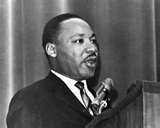
1915 American blues singer and guitarist, Muddy Waters, was born.
CLICK ON LINK BELOW...
http://www.youtube.com/watch?v=8hEYwk0bypY
1963 The Beatles snatch first 5 places in the US singles chart with,
Can't Buy Me Love
Twist and Shout
She Loves You
I Want To Hold Your Hand
Please Please Me
CLICK ON LINK BELOW...
http://www.youtube.com/watch?v=TU7JjJJZi1Q
1968 Civil rights leader, Martin Luther King, was shot dead by an unidentified white assassin at a motel in Memphis, Tennessee. Maker of the famous 'I have a dream' speech, he was awarded the Nobel Peace Prize, in 1964.
CLICK ON LINK BELOW...
http://www.youtube.com/watch?v=gevdV4LvipQ
Tuesday, 3 April 2012
On This Day...
3rd April...
1987 Jewellery belonging to Wallace Simpson,was sold in an auction in Geneva. Rings, necklaces, brooches and other personal possessions were included and raised a sum total of £31million to go to medical research. Wallace had died a year before. Buyers were thought to include Elizabeth Taylor and Joan Collins.


1987 Jewellery belonging to Wallace Simpson,was sold in an auction in Geneva. Rings, necklaces, brooches and other personal possessions were included and raised a sum total of £31million to go to medical research. Wallace had died a year before. Buyers were thought to include Elizabeth Taylor and Joan Collins.

1969 Jim Morrison, of The Doors, was arrested by the FBI in Los Angeles and charged with interstate flight, to avoid being charged with 'lewd and lascivious behaviour in public', at a concert in Miami, Florida that year.

1924 Doris Day was born.

Vintage Brides

1920s bride...

1930s bride...

1940s bride...

1950s bride...

1960s bride...

1970s bride...

1980s bride...

1990s bride...

Styles have changed much over the years, but all brides are beautiful on their big day.
Friday, 30 March 2012
On This Day...
30th March...
1945 British rock guitarist Eric Clapton was born.

1853 Dutch Post-Impressionist painter, Vincent Van Gough was born.
Sadly, At the time of his death, only one of his paintings had sold.
"I cannot help it that my paintings do not sell. The time will come when people will see that they are worth more than the price of the paint."
(Letter to his brother Theo, October 1888.)

1867 America buys Alaska from Russia for $7.2million. Senators in Washington are calling it "An awful lot of ice for an awful lot of dollars".

Subscribe to:
Posts (Atom)